FASD family portal photo 4.png

The Transcranial Direct Current Stimulation (tDCS) & Cognitive Training Study

This study examines the physical and mental strengths and weaknesses in Fetal Alcohol Spectrum Disorders (FASD).

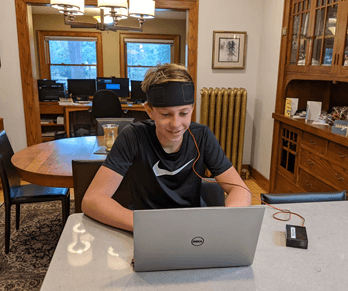
Researchers in the U of M FASD Research Lab are interested in testing whether combining cognitive rehabilitation (computerized brain training "games") along with mild electrical current on the scalp will increase learning from the brain training.


The goals of this clinical trial are to determine if children with FASD benefit from repeated sessions of computerized “games” that are designed to build attention, concentration, memory, and problem-solving, and also to test whether mild electrical current on the scalp [called transcranial direct current (tDCS)] can improve learning during the computerized “brain training”.


This study is for children and adolescents (8–17 years old) who were exposed to alcohol before birth. The research is focused on testing the intervention during a timeframe when the child’s brain is still rapidly developing.


Tags:

  • Includes in-person and remote participation
  • fMRI
  • 8-17 years old
  • History of prenatal alcohol exposure (PAE) - no diagnosis required

CTAs:

  • Bookmark
  • Enroll / Sign Up
  • Contact Me
  • Remind Me
  • Register

Cognitive training via games are designed to build attention, concentration, memory, and problem solving. In addition to participating in these cognitive training "games" and transcranial direct current (tDCS), participants will also receive MRI scans of the brain to determine if there are changes in the brain’s networks after cognitive training with and without the mild electrical current on the scalp.

Links

Developmental Areas